Flashcards for your exam

Your exam is in 4 weeks. Will you remember it?

Give Bunshu the date and it tells you, in a number, how ready you'll be on the day, and what would fix it if you're behind. Nothing to set up, your notes made into cards, and a session that fits the time you have.

Join waitlist

Free to study. No card details. Unsubscribe any time.

No ads, everNo account needed on your phoneBring your Anki decks
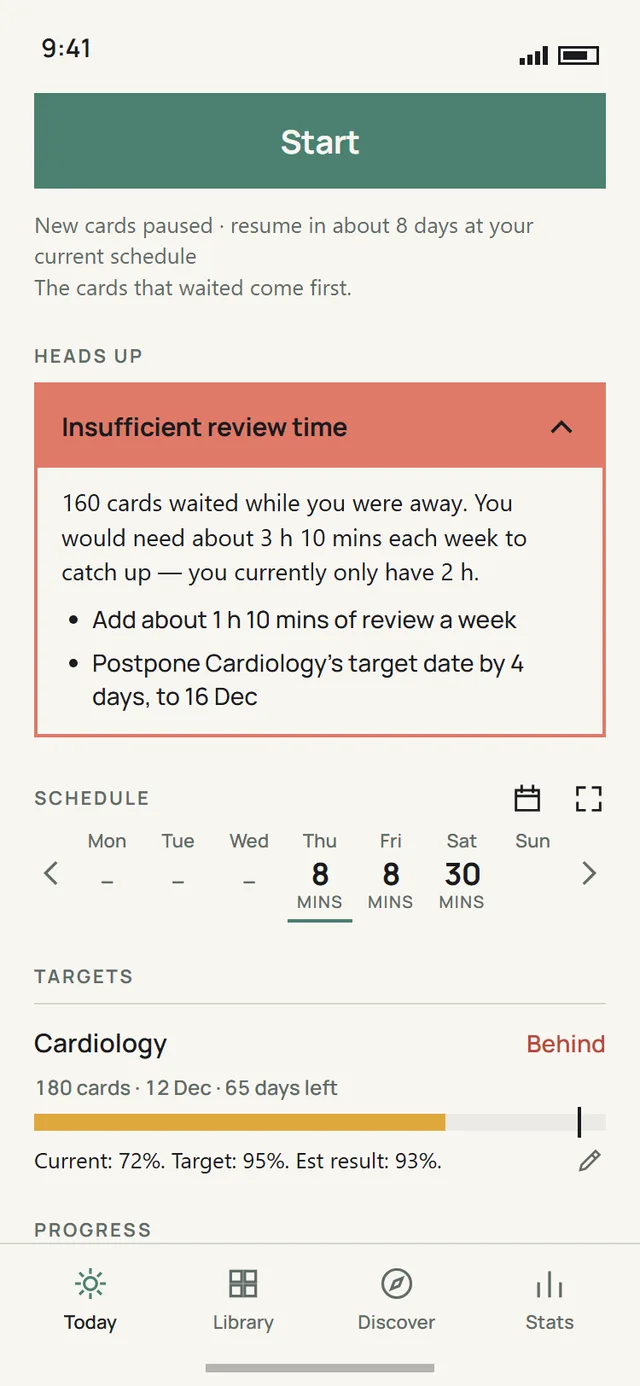
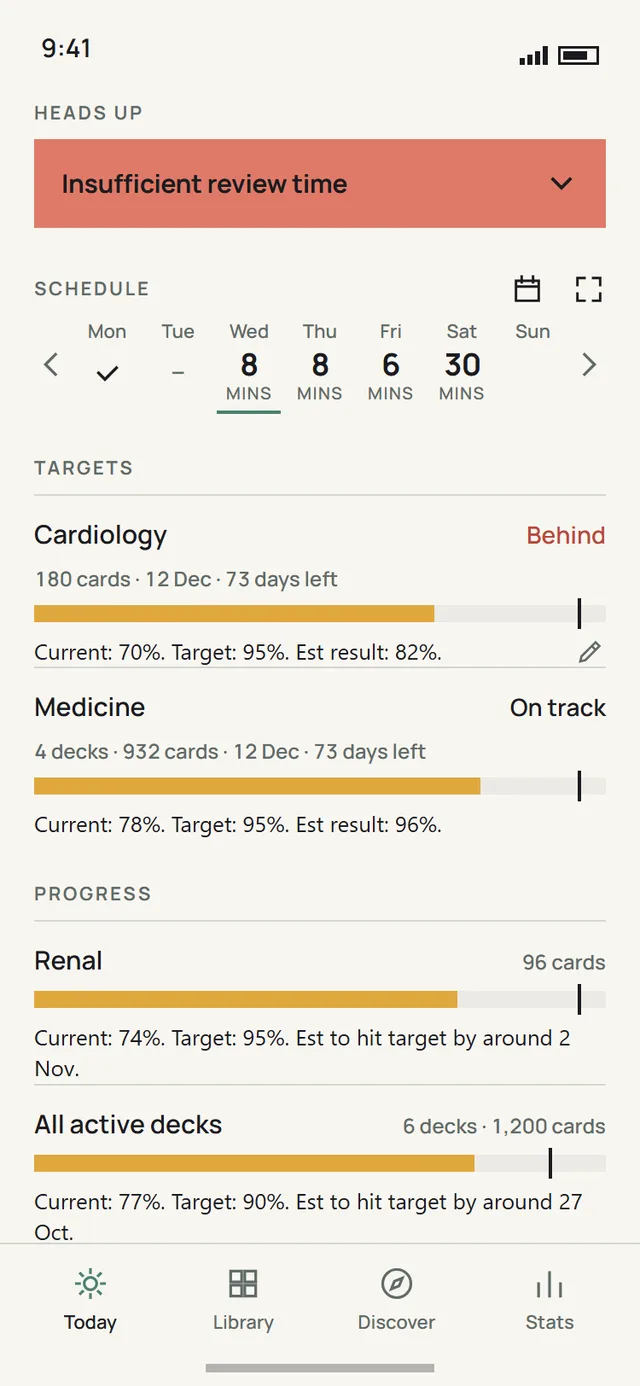
Today with a target behind: Heads Up's bar, the week's Schedule, and the Targets row reading Behind

What you get

Built around what students with a date said.

01 · The date

Ready on the day, or told early.

Give a deck your exam date. Bunshu plans back from it and says On track or Behind, with the recall it expects on the day. If you're behind, Heads Up lists what would fix it, with numbers: an hour more a week, a later date, a lower target. The day before is one full pass, so exam day has nothing left to cram.

Est. 82% on 12 Dec · target 95% · Behind
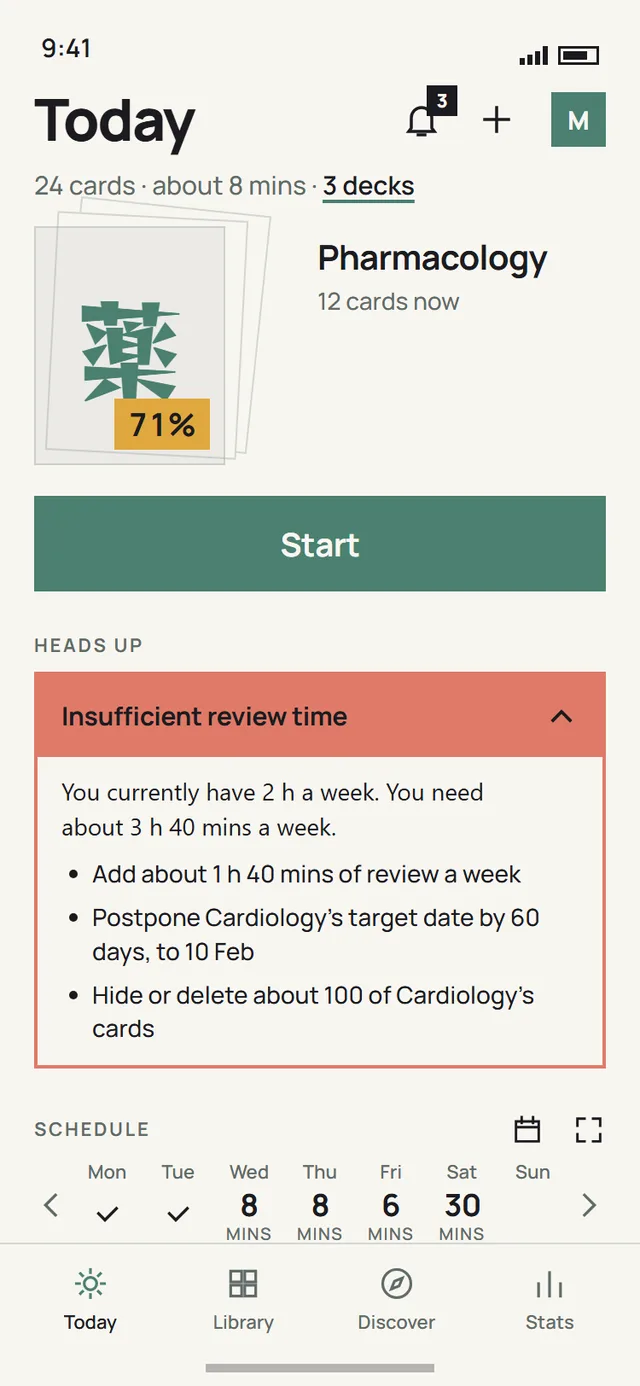
Heads Up open: what you have, what you need, and the changes that would close the gap, each with its number
02 · The setup

Nothing to learn before you start.

No settings, no add-ons, no tutorial, and on your phone no account to make. Pick a deck, tap Start. Your first card is up within a minute, and FSRS, the open memory model, fits itself to your reviews after a few hundred of them. The Sunday you'd have spent on settings is yours.

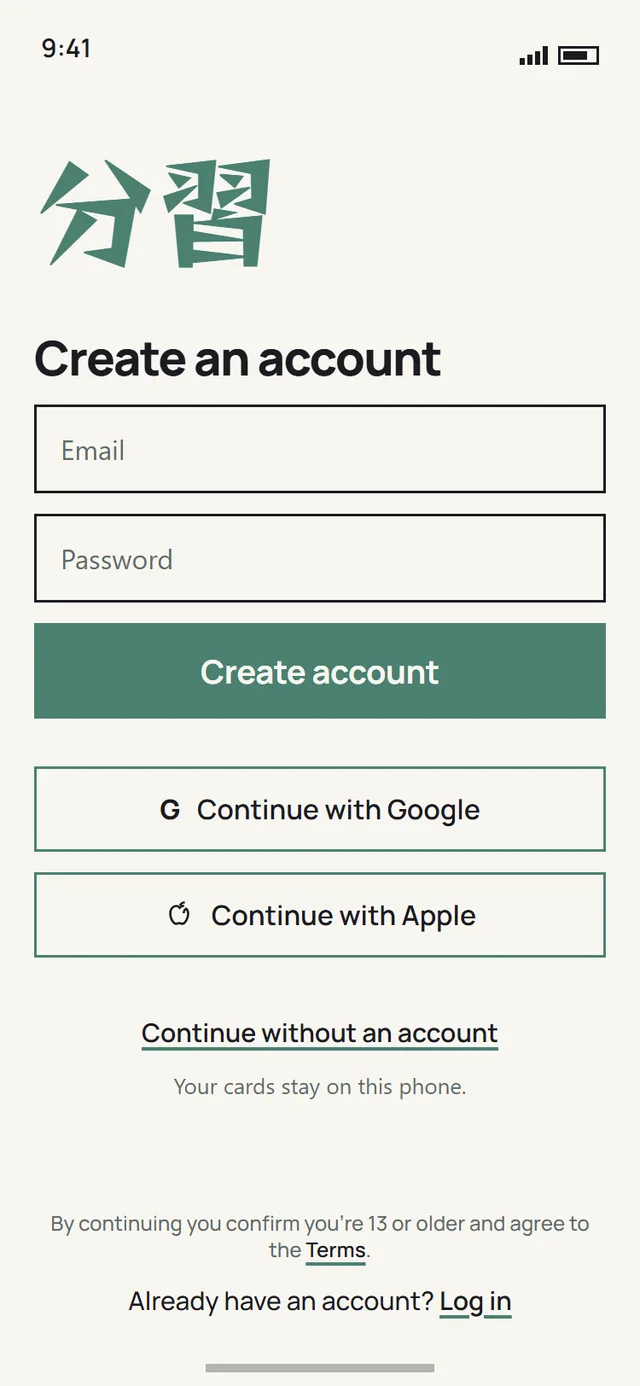
Study as a guest · nothing saved to servers
The first screen, with Continue without an account
03 · Making cards

Your notes, made into cards, checked against them.

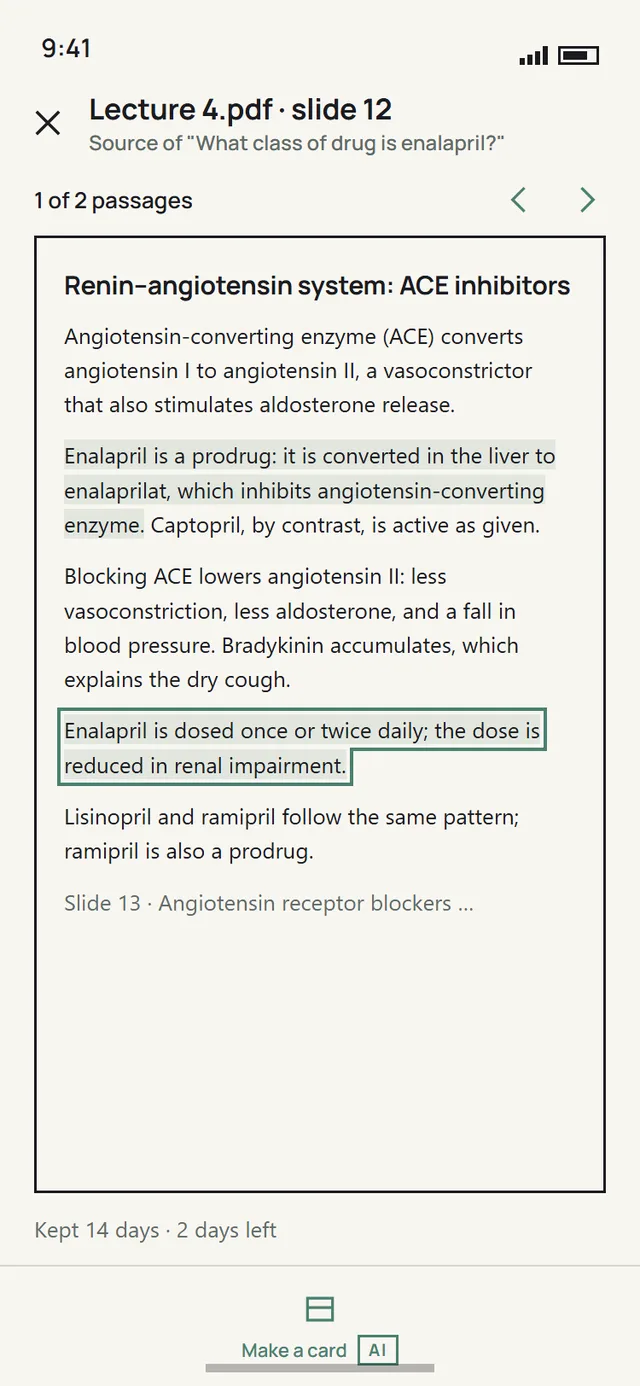
Add lecture notes, slides, a PDF or a photo of your handwriting. Bunshu shows what it understood, drafts three cards for your OK, then every card points to the line it came from and a second model checks it. Nothing is saved until you say so. Typing your own cards stays free and unlimited.

Every card points to its line in your notes
A drafted deck in the editor, a card's source open beside it on the line in the notes it came from
04 · The pile

Miss a week. Same session.

Every session is the cards that fit the minutes you set. Come back after time away and it's the same size: the cards that waited come first, most faded first, and new cards wait their turn. You never open the app to 900 due, and a deck with a date keeps to its plan.

8 minutes means 8 minutes
Today after a week away: a session of the usual size, with Heads Up on what the time away cost
05 · Where you stand

Numbers that tell the truth.

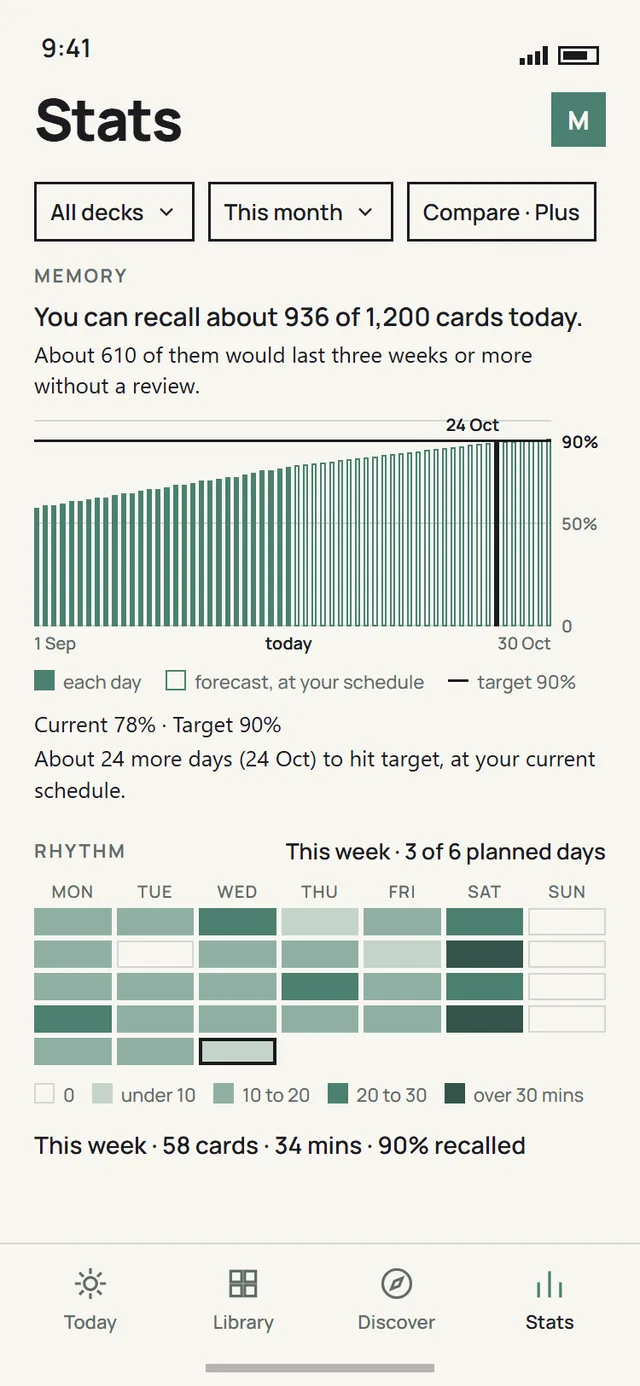
How much you could recall today, and the day you'll reach your target, in one line. Reviewing a card early adds almost nothing, so Bunshu never shows one early to fill time: the minutes go where they count, which is how the same hours carry further.

Current 78% · target 90% · about 24 more days
Stats: Memory as a bar a day with the target reached on 24 October, Rhythm's calendar and This week
06 · Keeping it up

A rhythm, not a streak.

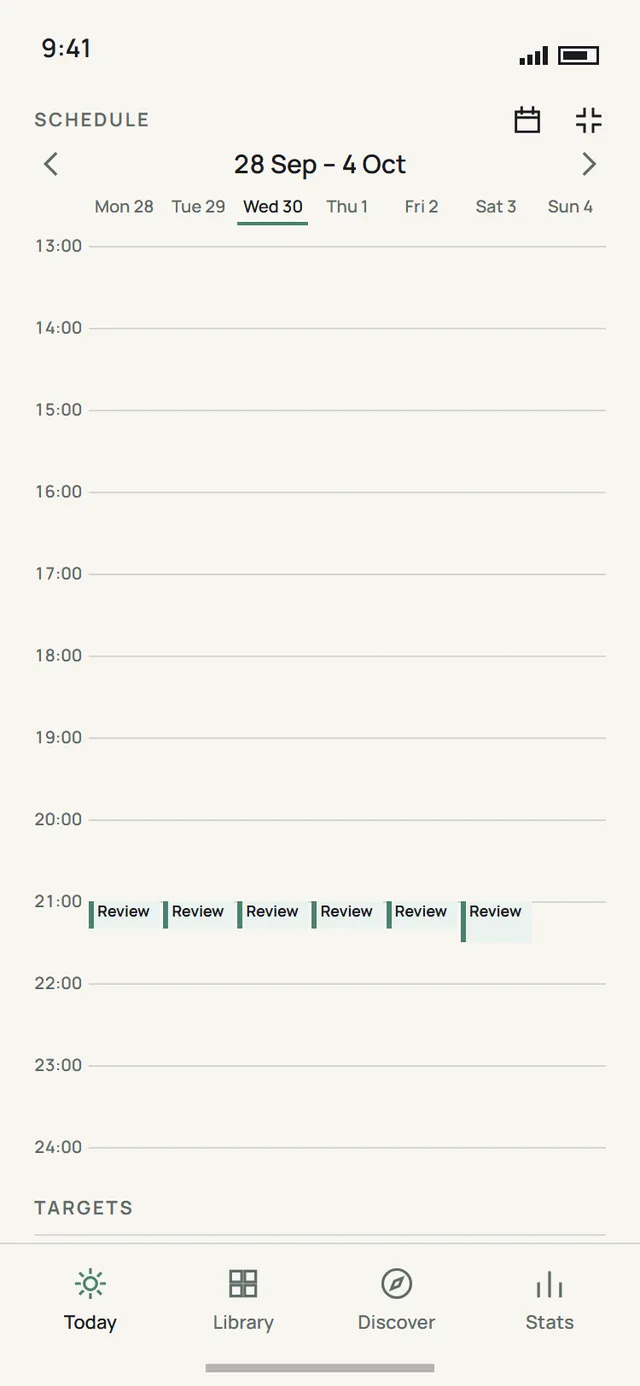
Place your sessions in Schedule, with a reminder at each and quiet hours while you sleep. Bunshu fills every session and never moves one. A day off is a blank day, not a broken streak, and each session ends on a stamp with your numbers and what to fix next.

You own when. Bunshu owns what.
Schedule: the week as one timetable, each session with its minutes

Sounds familiar?

Is it too late to use anki? My finals start in 4 weeksA flashcard user, on Reddit
Spent my entire Sunday watching YouTube videos about optimal settings.A flashcard user, on Reddit
Making the flashcard deck took longer than learning the actual material. But it FELT productive and that's the trapA flashcard user, on Reddit

We read 230,816 posts, comments and app reviews by people who use flashcard apps, and built Bunshu around what they said. About 9,900 of them were by students with an exam ahead.

Fair questions

What students ask.

Anki's fine, I just don't have time to learn it before finals.

There is nothing to learn. Pick a deck, tap Start, and your first card is up within a minute. Every setting already has a sensible value.

Making my own cards is how I learn.

Keep doing it: typing cards is free and unlimited. When the notes are long, Bunshu drafts them, and you check every card against the line it came from before it is saved. The thinking stays yours; the typing is what you skip.

Spaced repetition isn't for cramming.

True, and your exam still has a date. Give the deck the date and Bunshu plans back from it, tells you early if you're behind, and leaves the day itself with nothing to do.

AI flashcards are full of mistakes.

That's why nothing is saved until you've seen it. Every AI card is labelled, points to its source line, and a second model checks it before you do.

I've got years of cards in Anki.

Bring them. Decks import with images, tags and the review history, so nothing starts over.

Is it going to start charging for the basics?

Cards and reviews are free and unlimited on every plan, no ads, in writing. Export is always free.

In writing

Free to study, for as long as you like.

Free to study, unlimitedCards and reviews, on every plan.
No ads, everOn any plan.
Export is always freeEvery card, in formats other apps read.
Nothing is deletedStop paying and every card stays.

Plus adds unlimited AI drafting, generated audio, deep Stats and more storage, for US$9.99 a month or US$59.99 a year. Nothing you need to study is ever locked. The pricing page has the whole list.

We read 230,816 posts, comments and app reviews by people who use flashcard apps, and built Bunshu around what they said.

Try Bunshu for free today.

Estimated launch early 2027. Join the waitlist to get it first.

Free to study. No card details. Unsubscribe any time.