Flashcards for work, and for its own sake

What happens to your cards if the app dies?

With Bunshu, you already have them. Export everything, any time, free, in formats other apps read. Cards from your own reading, a short list of settings, AI only when you ask, and ten calm minutes a day.

Join waitlist

Free to study. No card details. Unsubscribe any time.

Export everything, freeNo account needed on your phoneNo ads, no streaks, no feed
Export: an Anki file, a CSV or the Bunshu package, each with what comes along

What you get

Built around what lifelong learners said.

01 · Notes first

Highlight a passage. Get a card.

Hand Bunshu a PDF, an article, slides or a photo of a page. It shows what it understood, drafts three cards for your OK, and every card points to the line it came from, with a second model checking each one. In the viewer, a highlight becomes a card, so your cards live beside your reading.

Every card points to its source line
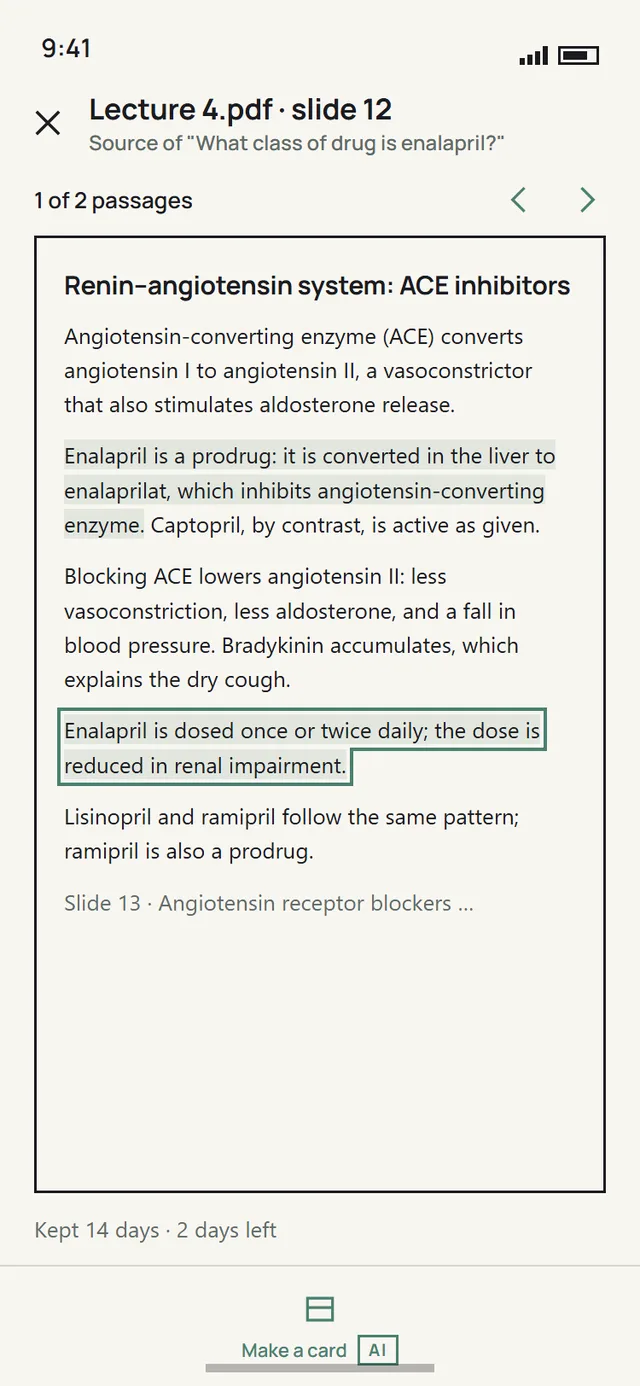
A drafted deck in the editor, a card's source open beside it on the line in the notes it came from
02 · Your data

Export everything, any time, free. In writing.

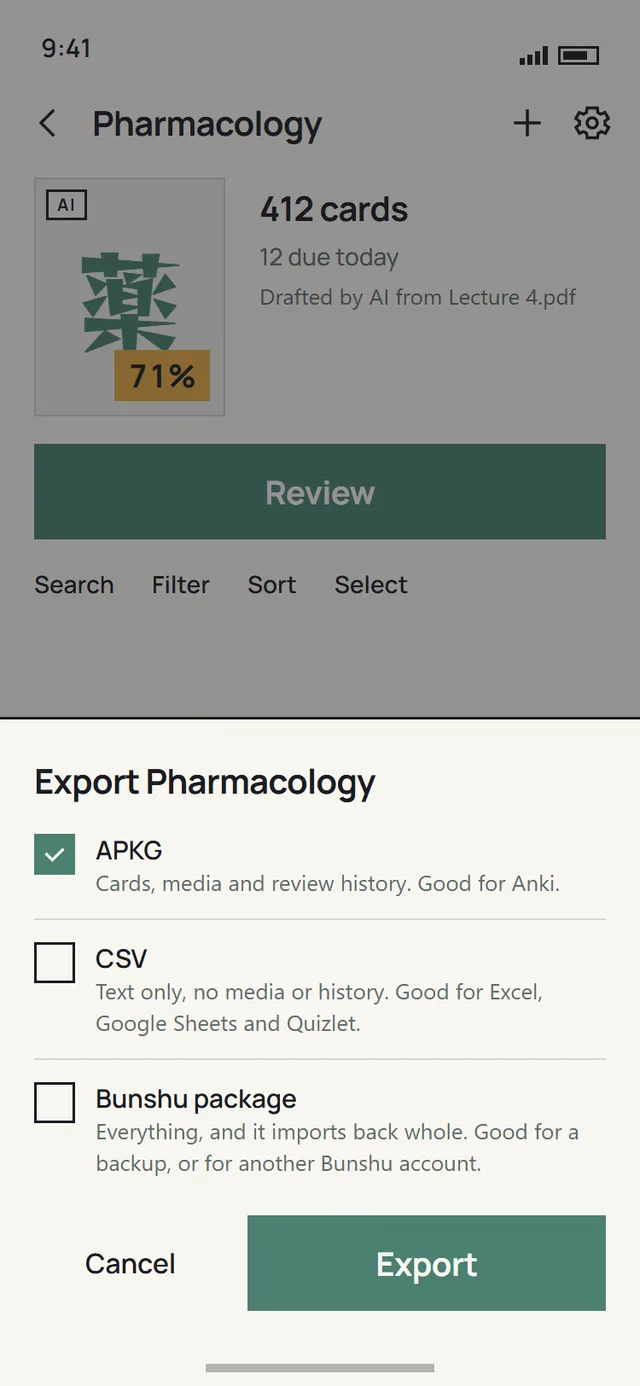
An Anki file with media and history, a CSV, or the Bunshu package, whose format is published and imports back whole. Stop paying and nothing is deleted. Go quiet for a year and nothing is deleted. Delete your account from inside the app whenever you like.

APKG · CSV · Bunshu package
Export: an Anki file, a CSV or the Bunshu package, each with what comes along
03 · Calm, and fewer options

A short list, every line with a default.

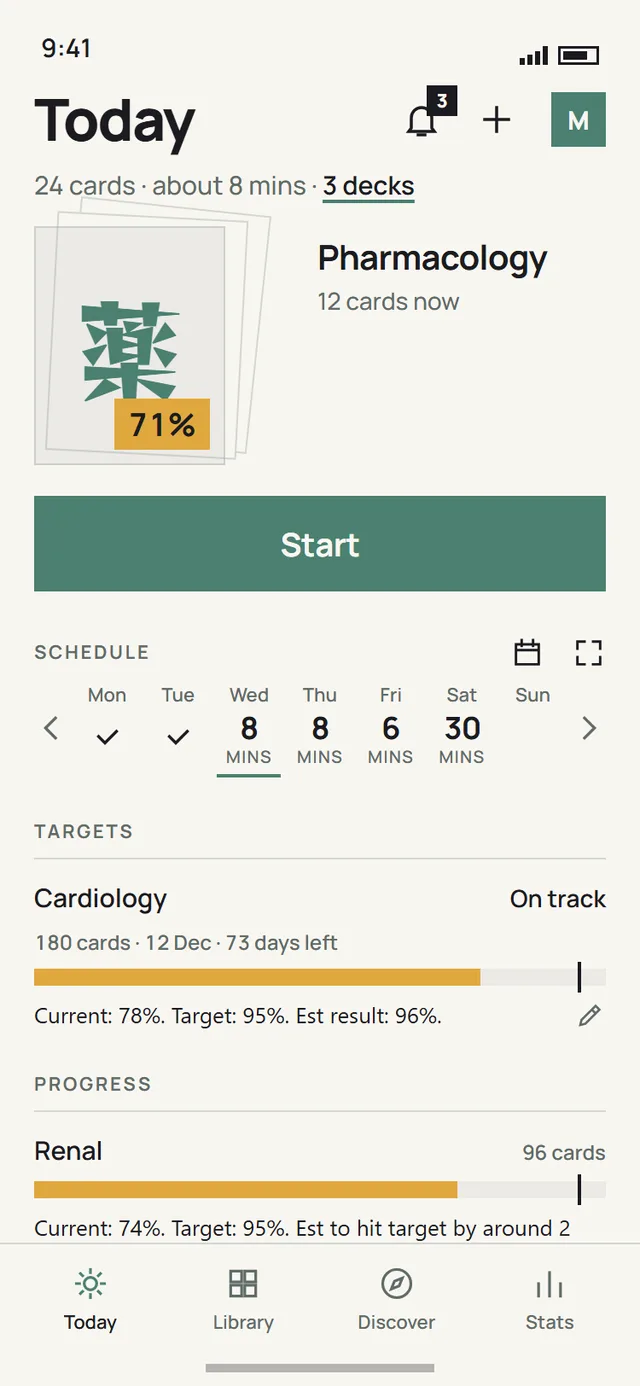
Settings is one short page, and every line already has a value that suits most people. No add-ons, no card templates, no feed, no streaks, no guilt. Two themes, square corners, and under a tenth of a second to a tap, on iPhone, Android, tablets and the web.

Nothing to configure · FSRS fits itself to you
Bunshu's Today screen: 24 cards, about 8 minutes, across three decks, with Start
04 · Work, and fun

Code and maths, in any card.

Three kinds of text in any block: ordinary text, code in a box that keeps its spacing, and maths rendered as you type. Question and answer, cloze, image occlusion, and typed or written answers with the difference marked. A deck for the certification, and one for the trivia.

Five kinds of card · one editor
A card with a code block, its spacing kept
05 · A calm habit

Ten minutes a day, at your pace.

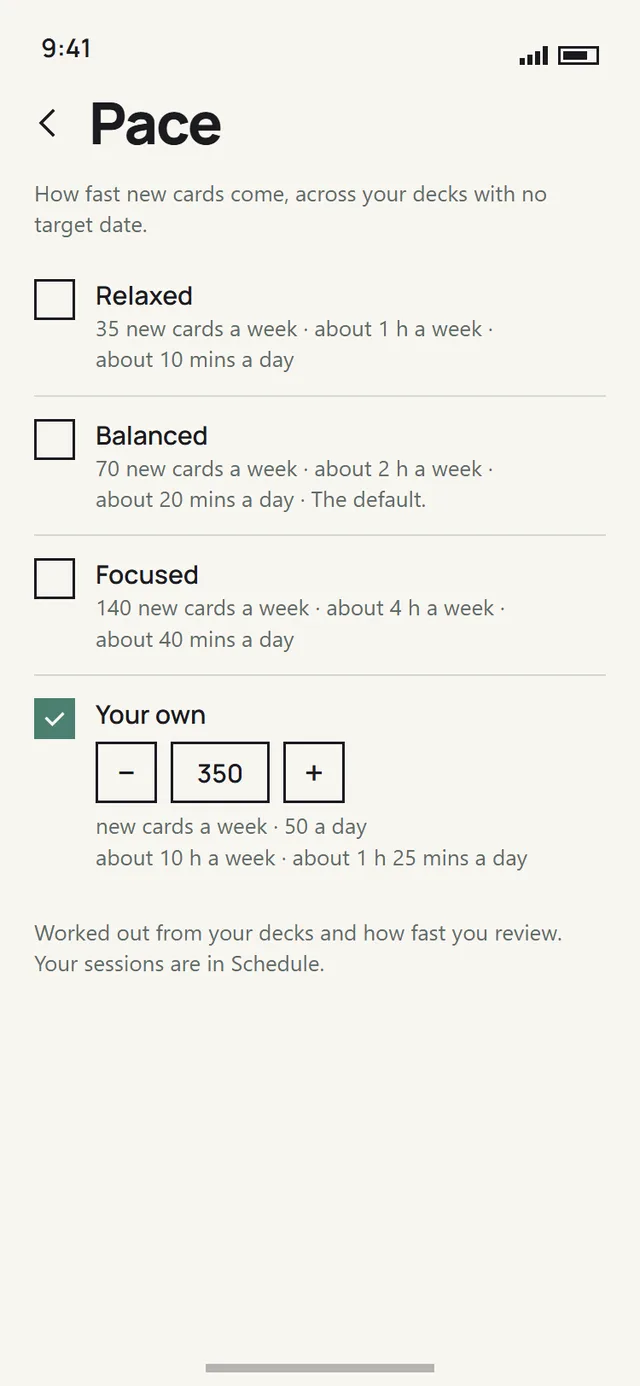
Relaxed is about ten minutes a day, Balanced about twenty, or set your own number. Place the sessions in Schedule, with quiet hours while you sleep. A session ends on a clear finish, a day off is blank, and nothing nags: Bunshu never moves a session of yours.

Relaxed · 35 new cards a week · about 10 mins a day
Pace: Relaxed, Balanced and Focused, each in your own numbers of cards and minutes
06 · Wary of AI

AI only when you ask, and named first.

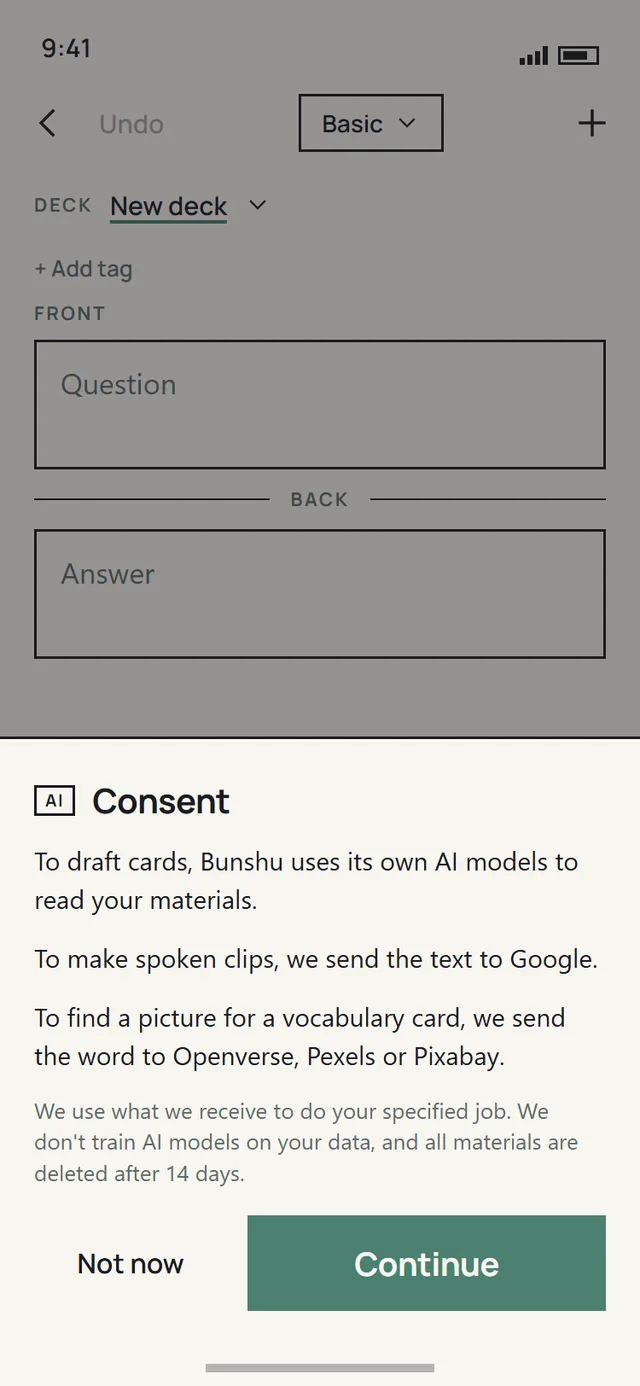
Typing your own cards is free and unlimited, and the AI never reads anything unless you hand it a document. Before the first upload, one sheet names every company whose models read your material. Materials are deleted after 14 days. On the phone, guest mode sends nothing anywhere.

Labelled · sourced · checked · and only on your tap
The consent sheet before the first upload for AI, naming each company that receives something

Sounds familiar?

I've always disliked how my notes lived in a different place than my active-recall contentA flashcard user, on Reddit
I think it's high time I exported all my notes in simple text format, just in caseA flashcard user, on Reddit
I've been using Anki for 10+ years and love it but always wanted something with a cleaner UXA flashcard user, on Reddit

We read 230,816 posts, comments and app reviews by people who use flashcard apps, and built Bunshu around what they said. About 2,500 of them were by adults learning for work or for its own sake, with no exam ahead.

Fair questions

What lifelong learners ask.

Anki is open source. Yours isn't.

Honest: Bunshu is not open source. What we put in writing instead: export everything, any time, free, as an Anki file, CSV or the Bunshu package, whose format is published; nothing is ever deleted for not paying or for going quiet; your account can be deleted from inside the app.

My notes live in Obsidian.

Honest: no Obsidian sync at launch. Bunshu keeps your materials for 14 days in a viewer where a highlight becomes a card, and every card's Source points back to its passage.

AI cards are slop.

Then don't use them: typing is free and unlimited. If you do, every AI card is labelled, points to its source line, is checked by a second model, and waits for your OK.

Who sees my cards?

No one but you. Encrypted on the way and on the servers; the AI reads your materials only when you ask it to draft. Guest mode on the phone sends nothing anywhere at all.

Another subscription?

Cards and reviews are free and unlimited, no ads. Plus is for AI without limit and the deep Stats, and you lose nothing if you stop.

In writing

Yours to keep, on every plan.

Free to study, unlimitedCards and reviews, on every plan.
No ads, everOn any plan.
Export is always freeEvery card, in formats other apps read.
Nothing is deletedStop paying and every card stays.

Plus adds unlimited AI drafting, generated audio, deep Stats and more storage, for US$9.99 a month or US$59.99 a year. Nothing you need to study is ever locked. The pricing page has the whole list.

We read 230,816 posts, comments and app reviews by people who use flashcard apps, and built Bunshu around what they said.

Try Bunshu for free today.

Estimated launch early 2027. Join the waitlist to get it first.

Free to study. No card details. Unsubscribe any time.